
7 Deadly Sins Test
The 7 Deadly Sins Test is a free 20-question personality quiz that measures your independent percentage across Pride, Greed, Lust, Envy, Gluttony, Wrath, and Sloth in two minutes. Start below to answer “what deadly sin am I?” and unlock your instant collector card.
Every Quiz Result Includes
- All seven sins scored on equal 24-pt math
- Interactive 3D collector sin card & opposite virtue
- 9:16 result image ready for TikTok & IG Stories
- Free, no signup, answers stay on your device
What Are the 7 Deadly Sins Test Cards?
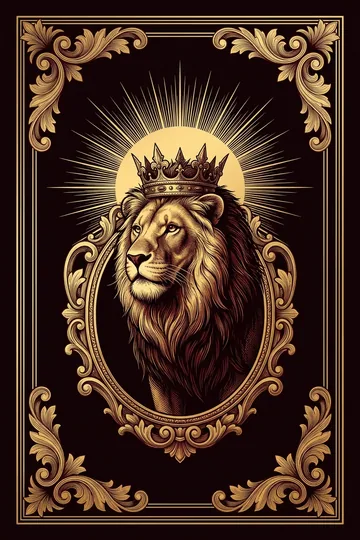
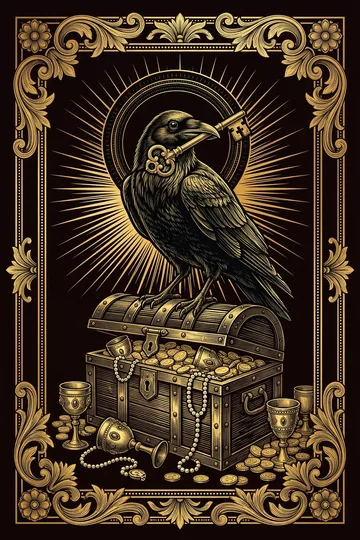
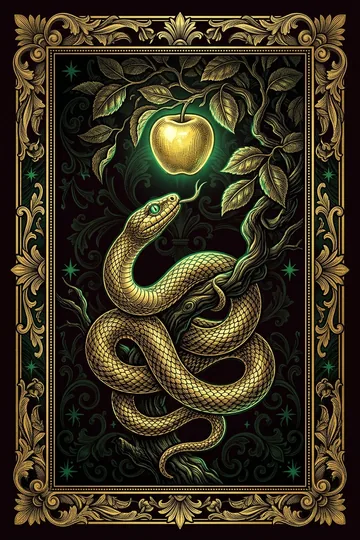
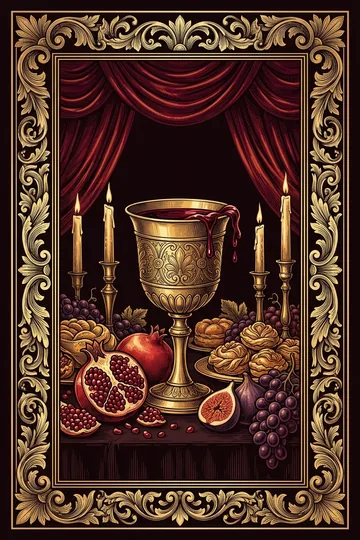
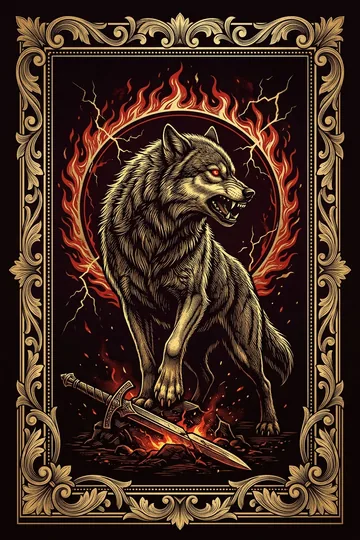
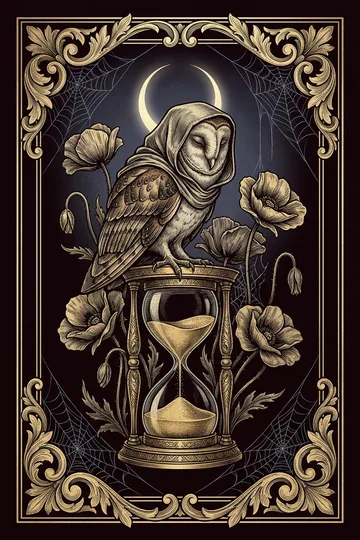
Each 7 Deadly Sins Test card represents one of the seven capital vices — Pride, Greed, Lust, Envy, Gluttony, Wrath, and Sloth. Your highest-scoring sin unlocks its illustrated collector Tarot card, and tapping any card below opens its complete breakdown and opposite virtue.

What Are the Seven Deadly Sins and Their Opposite Virtues?
The seven deadly sins are Pride, Greed, Lust, Envy, Gluttony, Wrath, and Sloth — paired directly with the seven opposite virtues of Humility, Generosity, Self-Control, Gratitude, Temperance, Patience, and Diligence. Each pair maps a recurring modern habit to a practical balancing response.
| Deadly Sin (Latin) | Opposite Virtue | Everyday Modern Trigger | Max Points |
|---|---|---|---|
| Pride(Superbia) | Humility | Defending ego over admitting mistakes | 24 pts (9 Qs) |
| Greed(Avaritia) | Generosity | Hoarding upgrades or deals beyond need | 24 pts (9 Qs) |
| Lust(Luxuria) | Self-Control | Chasing novelty, thrills, or constant validation | 24 pts (9 Qs) |
| Envy(Invidia) | Gratitude | Comparing your progress to others’ highlights | 24 pts (9 Qs) |
| Gluttony(Gula) | Temperance | Binging snacks, feeds, or episodes past fullness | 24 pts (9 Qs) |
| Wrath(Ira) | Patience | Replaying petty slights and sharp comebacks | 24 pts (9 Qs) |
| Sloth(Acedia) | Diligence | Delaying small errands to avoid mild friction | 24 pts (9 Qs) |
How Does This 7 Deadly Sins Test Score Your Answers?
This test scores each deadly sin independently from 0% to 100% by dividing your raw points by an identical 24-point ceiling (points ÷ 24 × 100). Every sin appears in exactly 9 of the 20 scenarios — three 4-point core triggers, three 3-point habits, and three 1-point subtle impulses — eliminating option-count bias.
How to Read Your 4 Score Tiers
- 0% – 25% (Mild):Background trait — rarely steers daily choices.
- 26% – 50% (Moderate):Situational habit — surfaces under stress or fatigue.
- 51% – 75% (Strong):Recurring reflex — close friends spot it immediately.
- 76% – 100% (Dominant):Signature vice — your primary card and main balance area.
3-Step Deterministic Tie-Breaker
- Compare each sin’s rounded percentage (points ÷ 24 × 100).
- If percentages match, compare exact raw points and the count of questions selecting that vice.
- If still tied, apply the fixed canonical order (Pride → Greed → Lust → Envy → Gluttony → Wrath → Sloth) so your collector card and result page always match.
More 7 Sins Tools & Guides
Where Do the Seven Deadly Sins Come From?
The seven deadly sins originated in 4th-century monastic psychology with Evagrius Ponticus (c. 375 CE), were codified as seven capital vices by Pope Gregory I in 590 CE, and are examined in modern personality psychology alongside Dark Triad traits.
- c. 375 CE
Evagrius Ponticus lists eight evil thoughts
Catalogued eight mental habits (logismoi) that derail monastic focus.
- 590 CE
Pope Gregory I codifies seven capital vices
Consolidated the list to seven in Moralia in Job, with Pride at the root.
- 1274
Thomas Aquinas analyzes capital vices
Summa Theologiae framed capital vices as root drives behind downstream habits.
- 1314
Dante maps seven terraces in Purgatorio
Paired each sin with its balancing virtue in the classic Pride-to-Lust order.
- 2014
Psychology links seven sins to Dark Triad
Veselka, Giammarco & Vernon (2014) tested sin traits empirically in PAID.
“A capital vice is one from which other vices arise, chiefly by being their final cause.”
“For pride is the root of all evil, of which it is said, as Scripture bears witness: Pride is the beginning of all sin.”
Primary Sources & Further Reading
- Encyclopaedia Britannica — Seven Deadly Sins
- Thomas Aquinas — Summa Theologiae (I–II, Q. 84: Capital Vices)
- Veselka, Giammarco & Vernon (2014), Personality and Individual Differences
- Wikipedia — Seven Deadly Sins (Historical Overview)
Written & reviewed by 7 Deadly Sins Test Editorial Team · For self-reflection & entertainment (not clinical advice).
What Questions Do People Ask About the 7 Deadly Sins Test?
The five quick answers below cover test length, 24-point percentage math, 9:16 card exports, local browser privacy, and friend comparisons.
How many questions are on this 7 Deadly Sins Test and how long does it take?+
The test has 20 everyday scenarios (4 choices each) and takes about 2 minutes. Your collector sin card and 7-sin percentages appear immediately with no login.
How does the 7 Deadly Sins Test calculate percentages and ties?+
Every sin appears in 9 of the 20 questions with an equal 24-point ceiling (three 4-pt, three 3-pt, three 1-pt options). Bars show independent 0%–100% intensity; ties break by raw points, pick count, then fixed order (Pride → Sloth).
Can I save my 7 Deadly Sins result card and share it on TikTok or Instagram?+
Yes. After Question 20, click “Save Result Image” to export a 1080 × 1920 vertical Tarot card with all 7 percentages and opposite virtue, or share directly to TikTok, Instagram, WhatsApp, X, Threads, and Reddit.
Is this 7 Deadly Sins Test free and private?+
Yes — 100% free with zero paywalls or accounts. Scoring and image export run locally in your browser; individual answers are never uploaded.
Can I compare my 7 Deadly Sins Test results with a friend?+
Yes. After finishing, click “Compare With a Friend” or copy your SINS code to compare all seven percentages on a dual radar chart.